Have you ever picked up a pair of Crocs and wondered how such a lightweight shoe can provide a cushioned feel under your feet?
In this guide
- 2. What Is Croslite in Crocs?
- 3. Who Should Understand Croslite Material?
- 4. What Is Croslite Made Of?
- 5. Why Does Crocs Use Croslite Instead of Ordinary Rubber?
- 6. The Story Behind Croslite: How a Material Became a Brand Identity
- 7. What Are the Main Properties of Croslite?
- 8. How Does Croslite Provide Comfort?
- 9. Is Croslite Waterproof?
- 10. Imagine Wearing the Same Shoes in Different Everyday Situations
- 11. Croslite and the Importance of Closed-Cell Construction
- 12. How Does Croslite Compare with Other Footwear Materials?
- 13. The Difference Between Croslite and EVA
- 14. What Happens When Croslite Is Exposed to Excessive Heat?
- 15. How Durable Is Croslite?
- 16. Is Croslite Worth the Price?
- 17. Why Croslite Is an Important Part of the Crocs Brand
- 18. Would You Choose Croslite Over Traditional Footwear Materials?
- 19. How to Clean and Maintain Croslite Crocs
- 20. How to Identify Genuine Croslite Crocs
- 21. Frequently Asked Questions About Croslite
- 22. Final Thoughts: Understanding the Material Behind Crocs
Unlike conventional footwear made primarily from leather, fabric, or traditional rubber, Crocs uses a specialized material that plays a major role in its distinctive design.
That material is called Croslite™.
It is one of the most recognizable technological features behind Crocs footwear and an important reason why the brand’s classic clogs feel different from many traditional shoes.
But what exactly is Croslite? Is it rubber, plastic, foam, or something completely different?
Understanding this material can help you make a better purchasing decision, especially if you are comparing Crocs with other casual footwear.
Let’s take a closer look at what makes Croslite special.
2. What Is Croslite in Crocs?
Croslite™ is a proprietary closed-cell resin material developed and used by Crocs.
It is the primary material used in the vast majority of Crocs Brand footwear and some accessories.
Unlike ordinary rubber or conventional plastic, Croslite is a specially formulated material designed to provide a combination of lightweight construction, cushioning, durability, and water resistance.
According to Crocs, its material technology is engineered to create footwear that is:
- Lightweight.
- Soft and comfortable.
- Water-resistant.
- Non-marking.
- Odour-resistant.
- Designed to provide cushioning.
The material is an important part of the construction of classic Crocs clogs, slides, and several other footwear styles.
In simple terms, Croslite is the material that helps give many Crocs their familiar lightweight feel and distinctive molded construction.
It is also important to understand that Croslite is a proprietary Crocs material, not a generic name for every type of foam used in footwear.
3. Who Should Understand Croslite Material?
Understanding Croslite is useful for more than just people who already own Crocs.
Different types of shoppers may want to learn about it for different reasons.
First-time Crocs buyers: If you are considering buying your first pair, understanding the material can help you decide whether its characteristics match your footwear preferences.
People comparing footwear: Shoppers comparing Crocs with EVA sandals, rubber clogs, or conventional shoes may want to understand the differences in materials.
Comfort-focused shoppers: People who prioritize lightweight footwear and cushioning may find the material’s properties particularly relevant.
Parents buying Crocs for children: Understanding cleaning requirements, heat sensitivity, and everyday care can help parents maintain their children’s footwear.
Crocs collectors: People interested in the construction and technology behind different Crocs collections may appreciate learning about the brand’s signature material.
Ultimately, knowing what Croslite is helps you understand why Crocs footwear has a distinctive identity.
4. What Is Croslite Made Of?
This is where things become particularly interesting.
Many people assume that Crocs are made from ordinary rubber or plastic because of their smooth, molded appearance.
However, Croslite is described by Crocs as a proprietary closed-cell resin material.
The company does not publicly disclose its complete proprietary formulation, so it would be inaccurate to claim that Croslite is made from one simple ingredient.
Crocs has explained that its Croslite material formulations incorporate elastomer resins and other production inputs.
These formulations are developed to achieve the characteristics required for the brand’s footwear.
For example:
- The material needs to remain lightweight.
- It should provide a cushioned feel.
- It should be suitable for molded footwear designs.
- It should offer resistance to water.
- It should maintain its functional characteristics during normal use.
This specialized formulation is what distinguishes Croslite from ordinary footwear materials.
Rather than focusing on a single raw ingredient, it is more useful to understand Croslite as a proprietary material technology developed specifically for Crocs products.
5. Why Does Crocs Use Croslite Instead of Ordinary Rubber?
Why would a footwear company develop its own material instead of simply using conventional rubber?
The answer comes down to product design and performance.
Traditional rubber has useful properties, including flexibility, grip, and durability. However, footwear manufacturers often need materials that offer a particular combination of weight, cushioning, molding characteristics, and functionality.
Croslite helps Crocs achieve its distinctive molded footwear design.
Here are some of the main characteristics that make it useful.
Lightweight construction: Helps make many Crocs styles easy to wear.
Cushioned feel: Provides a soft sensation underfoot.
Moldability: Supports the distinctive shapes and designs associated with Crocs footwear.
Water resistance: Makes many Croslite-based styles suitable for wet conditions.
Odour resistance: Helps reduce the development of unpleasant footwear odours.
Non-marking properties: Helps prevent the soles from leaving marks on many floor surfaces.
These characteristics allow Crocs to manufacture footwear with a distinctive combination of functionality and casual styling.
6. The Story Behind Croslite: How a Material Became a Brand Identity

Every recognizable footwear brand has something that makes its products different.
For Crocs, the story is closely connected to its material technology.
When Crocs introduced its first clog in 2002, the footwear stood out because of its unusual molded construction and lightweight feel.
The design was different from conventional shoes, and the material played a central role in creating that difference.
Over time, Crocs expanded its product range into sandals, slides, platforms, and other casual footwear styles.
Although the designs changed, Croslite remained an important part of the brand’s product identity.
The material became closely associated with the lightweight and cushioned feel that many consumers recognize when they think about Crocs.
Today, Croslite is not simply a technical component. It is one of the defining features of the Crocs footwear brand.
7. What Are the Main Properties of Croslite?
To understand why Crocs uses this material, it helps to look at its most important properties individually.
1. Lightweight
One of the most noticeable characteristics of Croslite footwear is its low weight.
This helps make many classic Crocs models convenient for everyday casual activities.
2. Soft and Cushioned
Croslite is formulated to provide a cushioned feel underfoot.
The molded construction helps create a comfortable surface for casual wear.
3. Water-Resistant
Many Croslite-based Crocs styles can be worn in wet conditions.
The material does not behave like absorbent fabric or untreated leather.
However, water resistance should not be confused with complete waterproof protection for every activity.
4. Odour-Resistant
Crocs describes Croslite as an odour-resistant material.
This is a useful characteristic for footwear that people may wear regularly in everyday situations.
However, odour resistance does not mean that shoes can never develop unpleasant smells.
5. Non-Marking
The material is designed to be non-marking, which can help prevent unwanted marks on suitable floor surfaces.
6. Durable for Everyday Use
Croslite is formulated to provide durable footwear for normal use.
Actual lifespan depends on factors such as frequency of use, environmental conditions, care, and the specific product design.
8. How Does Croslite Provide Comfort?
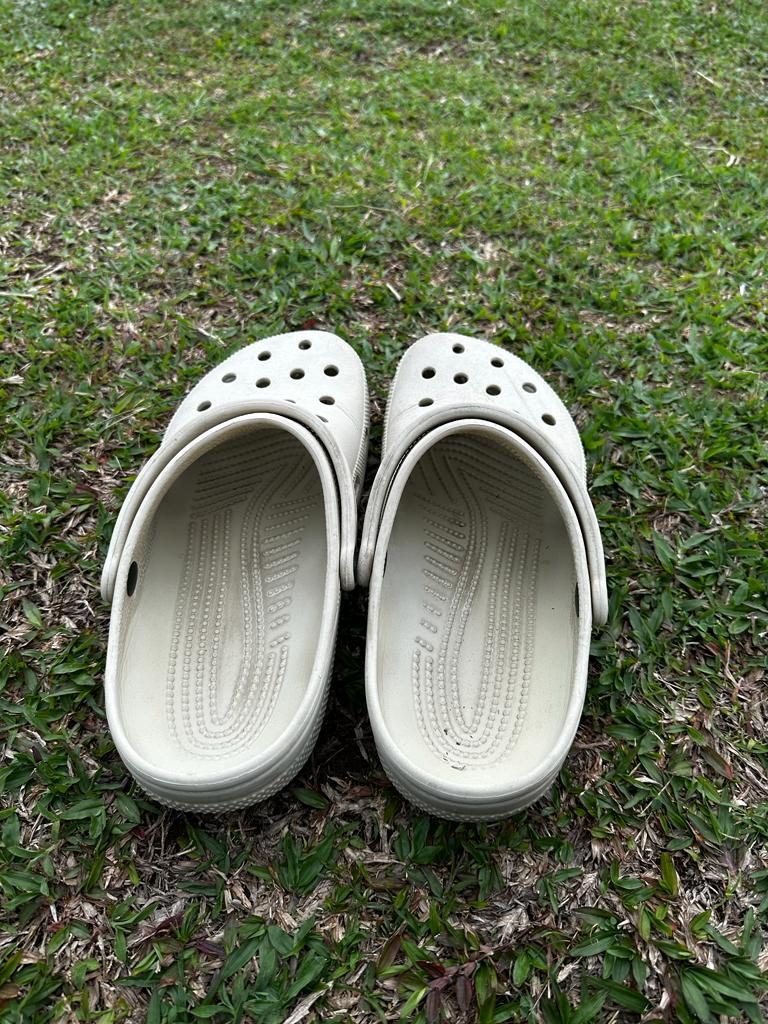
Comfort is one of the main reasons people choose Crocs.
But how does Croslite contribute to that experience?
The answer is connected to cushioning and the way the footwear is constructed.
Croslite is designed to provide a soft, cushioned feel when the foot makes contact with the footwear.
When you walk, your feet experience repeated contact with the ground. A cushioned footwear material can help absorb some of the impact associated with these movements.
The molded footbed also provides a surface designed around the shape of the shoe.
Several factors contribute to the overall wearing experience:
- The lightweight material reduces the feeling of wearing heavy footwear.
- The cushioned construction provides a soft underfoot sensation.
- The roomy design of many classic models allows space around the toes.
- The molded shape helps create a consistent footwear structure.
However, comfort is personal.
Not everyone will find the same footwear equally comfortable. Foot shape, sizing, walking habits, and individual support requirements all influence the experience.
Croslite should therefore be understood as a comfort-focused material, not a guarantee that every Crocs model will suit every person’s feet.
9. Is Croslite Waterproof?
This is one of the most common questions among Crocs shoppers.
The short answer is that Croslite is water-resistant, and many footwear styles made from it are suitable for wet environments.
Unlike conventional fabric footwear, Croslite does not absorb water in the same way.
This makes many classic Crocs designs convenient for activities such as:
- Walking around the house.
- Visiting the beach.
- Gardening.
- Casual outdoor activities.
- Everyday use in wet conditions.
However, there is an important distinction between water-resistant footwear and waterproof footwear.
Water resistance describes the material’s ability to resist water exposure. Waterproof footwear generally provides a higher level of protection against water entering the shoe.
The ventilation openings in classic Crocs clogs also allow water to enter and drain.
Therefore, although the material itself is water-resistant, classic Crocs should not be treated as fully waterproof shoes.
For water-related activities, always consider the specific footwear design and its intended use.
10. Imagine Wearing the Same Shoes in Different Everyday Situations
Imagine starting your morning by walking around your house.
Later, you step outside to collect a delivery. After that, you visit a nearby shop and return home.
You want footwear that is convenient, lightweight, and easy to clean.
This is where many people appreciate Croslite-based footwear.
Instead of putting on heavy shoes for every short trip, you can simply wear your Crocs.
Now imagine a different situation.
You are working in the garden, and your footwear comes into contact with wet soil and water.
A pair of traditional fabric shoes might require more attention after such an activity. A classic Croslite clog can generally be rinsed and cleaned more easily.
These examples help explain why the material is useful for casual and practical footwear.
Of course, the suitability of Crocs depends on the activity. They are not a replacement for protective footwear or specialized shoes when those are required.
11. Croslite and the Importance of Closed-Cell Construction
What does the term closed-cell resin actually mean?
It describes a material structure in which the internal cells are enclosed rather than forming an interconnected network of open spaces.
This type of structure can influence how a material behaves when exposed to water and how it feels during use.
In the context of Croslite, the closed-cell resin formulation is part of the technology Crocs uses to develop lightweight and water-resistant footwear.
This is one reason Croslite is different from conventional open-cell cushioning materials, which can have different moisture-handling characteristics.
It is important not to assume that every closed-cell material has identical performance.
The actual properties depend on its chemical formulation, manufacturing process, and final product design.
Croslite’s specific characteristics come from Crocs’ proprietary formulation rather than the closed-cell structure alone.
12. How Does Croslite Compare with Other Footwear Materials?
When shopping for casual footwear, you may encounter several different material names.
Rubber, EVA, PVC, and Croslite are often mentioned in product descriptions.
Although some of these materials may share certain characteristics, they are not interchangeable.
Here is a simple comparison.
| Material | Common characteristics | Typical footwear use |
|---|---|---|
| Croslite | Proprietary closed-cell resin, lightweight, cushioned | Crocs footwear |
| EVA | Lightweight, flexible, foam cushioning | Slides, sandals, midsoles |
| Rubber | Flexible, durable, available in different hardness levels | Outsoles, sandals, boots |
| PVC | Moldable, water-resistant in many applications | Rain footwear, sandals |
| Leather | Natural material, varies in flexibility and breathability | Formal and casual shoes |
The most important distinction is that Croslite is Crocs’ proprietary material technology, while EVA, rubber, and PVC refer to broader material categories.
Their performance depends on the particular formulation and manufacturing process.
13. The Difference Between Croslite and EVA
One comparison deserves particular attention: Croslite vs EVA.
EVA stands for ethylene-vinyl acetate. It is a widely used polymer in footwear manufacturing.
You can find EVA in running shoe midsoles, sandals, slides, and other cushioned footwear.
Both Croslite and EVA can be used to create lightweight footwear with cushioning.
However, they are not exactly the same material.
Croslite:
- A proprietary Crocs closed-cell resin formulation.
- Developed around Crocs’ footwear technology.
- Used in the vast majority of Crocs Brand footwear.
- Designed to provide lightweight cushioning and water resistance.
EVA:
- A widely used polymer in the footwear industry.
- Available in different formulations and foam densities.
- Commonly used in cushioning components and molded footwear.
- Its performance depends on the specific formulation and manufacturing process.
Which one is better?
There is no universal answer.
The right material depends on the intended footwear design, cushioning requirements, durability expectations, and personal preferences.
It is also important to avoid assuming that all EVA footwear performs identically or that every Crocs model uses only Croslite.
14. What Happens When Croslite Is Exposed to Excessive Heat?
Here is something every Crocs owner should understand.
Although Croslite is designed for everyday use, it can be affected by excessive heat.
Imagine leaving your favourite Crocs inside a car parked under direct sunlight.
After several hours, you return and notice that the shoes no longer look exactly as they did before.
They may have become smaller, warped, or distorted.
Why does this happen?
Excessive heat can cause Croslite footwear to shrink or lose its original shape.
This is particularly important in hot climates where temperatures inside parked vehicles can become extremely high.
To avoid unnecessary damage:
- Do not leave Crocs inside hot cars.
- Avoid prolonged exposure to intense direct sunlight.
- Do not dry them near heaters.
- Avoid dishwashers and high-temperature cleaning methods.
- Store them in a cool, dry place.
Following these precautions can help maintain the original shape and fit of your footwear.
15. How Durable Is Croslite?
Durability is another important consideration when buying Crocs.
Croslite is formulated to create soft, lightweight, and durable footwear.
However, durability does not mean that a pair of Crocs will last forever.
The lifespan of Croslite footwear depends on several factors.
Frequency of use: Shoes worn every day may experience more wear than those used occasionally.
Walking surfaces: Rough or abrasive surfaces can contribute to outsole wear.
Environmental conditions: Excessive heat and prolonged exposure to sunlight can affect the material.
Cleaning habits: Appropriate cleaning methods help maintain the footwear’s appearance and condition.
Product design: Different Crocs models may have different constructions and decorative components.
For everyday casual use, Croslite can be a practical footwear material. However, it is important to choose the right footwear for the intended activity.
16. Is Croslite Worth the Price?
Crocs generally cost more than some basic casual footwear alternatives.
This often leads shoppers to ask whether the material justifies the price.
The answer depends on what you value.
If you appreciate lightweight footwear, a cushioned feel, convenient cleaning, and distinctive designs, Croslite-based Crocs may offer features worth paying for.
However, you should also consider:
- The specific model.
- The quality of construction.
- Your intended frequency of use.
- The fit and comfort.
- The price compared with alternative footwear.
A standard Classic Clog and a special-edition collaboration may have very different prices, even when they share similar core material technology.
Rather than paying only for the material name, consider the complete product and whether it meets your requirements.
17. Why Croslite Is an Important Part of the Crocs Brand
Croslite is not simply a material used to manufacture footwear.
It is one of the technologies that helped Crocs establish a recognizable product identity.
The company’s distinctive molded clogs became popular partly because of their unusual appearance and lightweight construction.
The material helped make that design possible.
Over time, Crocs expanded into different footwear categories, colours, collaborations, and accessories while continuing to use Croslite in the majority of its brand footwear.
It is also important to understand that Crocs uses other material technologies in selected collections, including LiteRide and Free Feel Technology.
Therefore, not every Crocs product should be assumed to have identical construction.
Nevertheless, Croslite remains central to understanding what makes classic Crocs footwear distinctive.
18. Would You Choose Croslite Over Traditional Footwear Materials?
Now that you understand the basics of Croslite, think about what matters most when choosing everyday footwear.
Would you prefer a lightweight, cushioned shoe that is easy to clean?
Or would you rather choose conventional rubber, leather, or fabric footwear?
There is no single material that is best for every situation.
The right choice depends on the footwear design, intended activity, comfort requirements, and personal preference.
Have you ever compared Croslite Crocs with EVA sandals or traditional rubber clogs? Which material do you prefer, and why?
Share your experience and help other shoppers understand what to consider before buying their next pair.
19. How to Clean and Maintain Croslite Crocs
One practical advantage of many Croslite-based Crocs styles is that they are relatively easy to clean.
You do not need complicated cleaning products for routine maintenance.
Here is a simple cleaning method.
Step 1: Remove loose dirt
Use a soft brush or cloth to remove loose dirt from the footwear.
Step 2: Prepare a cleaning solution
Mix mild soap with cold water.
Step 3: Clean the surface
Use a soft cloth or sponge to gently clean the upper, footbed, and outsole.
Step 4: Rinse thoroughly
Remove soap residue using clean water.
Step 5: Air-dry naturally
Allow your Crocs to dry in a cool, well-ventilated area.
Step 6: Store properly
Keep them away from excessive heat and prolonged direct sunlight.
Important: Avoid aggressive cleaning chemicals, high-temperature washing, and excessive heat. For specific products, follow the cleaning instructions provided by Crocs.
20. How to Identify Genuine Croslite Crocs
Because Crocs is a popular footwear brand, shoppers may encounter imitation products marketed as genuine Crocs.
Understanding the material can help you ask better questions when buying.
Here are some useful precautions.
Buy from trusted sellers: Official Crocs stores and authorized retailers are preferable.
Check product details: Compare the model name, product number, and design with official listings.
Examine the construction: Look at the overall finishing, molded details, and branding.
Check the price: Be cautious when a seller offers a supposedly genuine product at an unusually low price.
Ask about authenticity: A reputable seller should be able to explain the product’s source.
One important point: You cannot reliably confirm authenticity just by touching the material or judging how soft the footwear feels.
Counterfeit products may imitate the appearance and feel of genuine footwear.
The purchasing source and verifiable product information are more reliable indicators.
21. Frequently Asked Questions About Croslite
What is Croslite in Crocs?
Croslite is a proprietary closed-cell resin material developed by Crocs. It is used in the vast majority of Crocs Brand footwear and is formulated to provide lightweight cushioning and water resistance.
Is Croslite rubber or plastic?
Croslite is neither ordinary rubber nor conventional plastic. Crocs describes it as a proprietary closed-cell resin material.
Is Croslite the same as EVA?
No. EVA is ethylene-vinyl acetate, a widely used polymer in footwear. Croslite is Crocs’ proprietary material formulation.
Are all Crocs made of Croslite?
Croslite is used in the vast majority of Crocs Brand footwear, but not every product is necessarily made entirely from it. Some styles incorporate other materials and technologies.
Is Croslite waterproof?
Croslite is water-resistant, but that does not make every Croslite-based shoe completely waterproof. Classic clogs also have ventilation openings through which water can enter.
Does Croslite smell?
Croslite is designed to be odour-resistant. However, odours can still develop because of sweat, dirt, moisture, and insufficient cleaning.
Does Croslite shrink in the sun?
Yes. Excessive heat and prolonged exposure to direct sunlight can cause Crocs made from Croslite to shrink or warp.
Is Croslite durable?
Croslite is formulated to provide durable footwear for everyday use. Actual durability depends on usage, storage, environmental conditions, and the particular product.
Can Croslite be recycled?
Do not assume that ordinary household recycling facilities accept Croslite footwear. Recycling options depend on the material, local facilities, and available manufacturer programmes. Check current Crocs sustainability information for applicable options.
How do you clean Croslite?
For many classic Croslite styles, hand washing with mild soap and cold water is suitable. Rinse thoroughly and allow the footwear to air-dry naturally.
Related guides
22. Final Thoughts: Understanding the Material Behind Crocs
So, what is Croslite in Crocs?
It is a proprietary closed-cell resin material that plays a major role in the design and functionality of Crocs footwear.
Its combination of lightweight construction, cushioning, water resistance, and odour-resistant properties helps distinguish Crocs from many conventional footwear options.
Although Croslite is often compared with rubber, plastic, and EVA, it is important to understand that it is a distinct proprietary material technology.
For shoppers, knowing about Croslite provides a better understanding of why Crocs feel different, how to maintain them, and what to consider before purchasing a pair.
The next time you pick up a Classic Clog, remember that its distinctive feel is not simply the result of an unusual shoe design.
A significant part of the experience comes from the material behind it.
Croslite is one of the key reasons Crocs became recognizable in the world of casual footwear.